Introduction
Understanding the pandemic meaning is important because pandemics can affect millions of people across different countries and communities. A pandemic refers to a disease outbreak that spreads across large geographical areas and affects a significant number of people. Unlike a small local outbreak, a pandemic can cross national borders and create major challenges for healthcare systems, businesses, schools, governments, and families. The term became widely recognized during the COVID-19 crisis, but pandemics have occurred throughout human history. Learning what a pandemic is, how it develops, and how it affects society can help people understand public health information more clearly. It can also encourage individuals and communities to take sensible precautions when infectious diseases begin spreading rapidly.
What Is the Pandemic Meaning?
The pandemic meaning can be explained simply as the widespread occurrence of an infectious disease across countries, continents, or large parts of the world. The word “pandemic” comes from Greek roots that relate to “all people.” In public health, the term is generally used when an infectious disease spreads widely among populations across multiple geographical regions. A pandemic does not necessarily mean that every person becomes infected. Instead, it describes the broad geographical spread and significant transmission of a disease. The severity of a pandemic can vary considerably depending on the disease, its transmission rate, available treatments, immunity levels, and the effectiveness of public health responses. Therefore, the word pandemic mainly describes the scale of disease spread rather than automatically indicating how dangerous a disease is.
Pandemic vs Epidemic vs Outbreak
People often confuse the terms outbreak, epidemic, and pandemic, although they describe different levels or patterns of disease spread. An outbreak usually refers to cases of a disease occurring in a particular community, location, or group over a specific period. An epidemic generally describes a larger increase in disease cases than normally expected within a particular region or population. A pandemic involves much wider geographical spread, often affecting multiple countries or continents.
| Term | General Meaning | Geographic Spread |
|---|---|---|
| Outbreak | Unexpected cases in a specific place or group | Local |
| Epidemic | Significant increase in cases in a region | Regional or national |
| Pandemic | Widespread disease transmission across regions | International or global |
| Endemic | Disease regularly present in a particular area | Stable or predictable |
Understanding these differences makes the pandemic meaning easier to recognize when reading health-related information.
How Does a Pandemic Start?
A pandemic can begin when an infectious disease emerges or when an existing disease develops characteristics that allow it to spread widely. Several factors can contribute to large-scale transmission. A disease may spread quickly when people have little or no previous immunity to it. International travel can also allow infections to move from one location to another within a short period. Population density, social interaction, environmental conditions, and limited access to healthcare may further influence transmission.
The early stage of a potential pandemic can be difficult to predict. Health authorities usually monitor unusual increases in cases, investigate how the disease is transmitted, and assess whether infections are spreading between communities. If sustained transmission occurs across multiple regions, governments and international health organizations may introduce measures designed to slow the spread and protect vulnerable populations.
Common Causes of Pandemics
Pandemics are generally associated with infectious diseases that can spread efficiently among humans. Respiratory infections are particularly capable of spreading quickly because people can transmit pathogens through droplets, aerosols, or close contact. Other diseases may spread through contaminated food or water, insects, animals, or direct physical contact.
Some important factors that can contribute to widespread disease transmission include:
- A population with limited immunity to a new infection.
- Efficient transmission between people.
- Frequent international travel and movement.
- Close contact in crowded environments.
- Limited healthcare resources or delayed detection.
These factors do not automatically create a pandemic, but when several occur together, disease transmission can become more difficult to control.
Historical Examples of Pandemics
History contains several examples of diseases that spread across large geographical areas. The 1918 influenza pandemic, often called the Spanish flu, caused widespread illness and deaths in many parts of the world. Other major examples include the HIV/AIDS pandemic, which has affected populations globally over several decades. The COVID-19 pandemic, caused by the SARS-CoV-2 virus, became one of the most significant global health events of the modern era.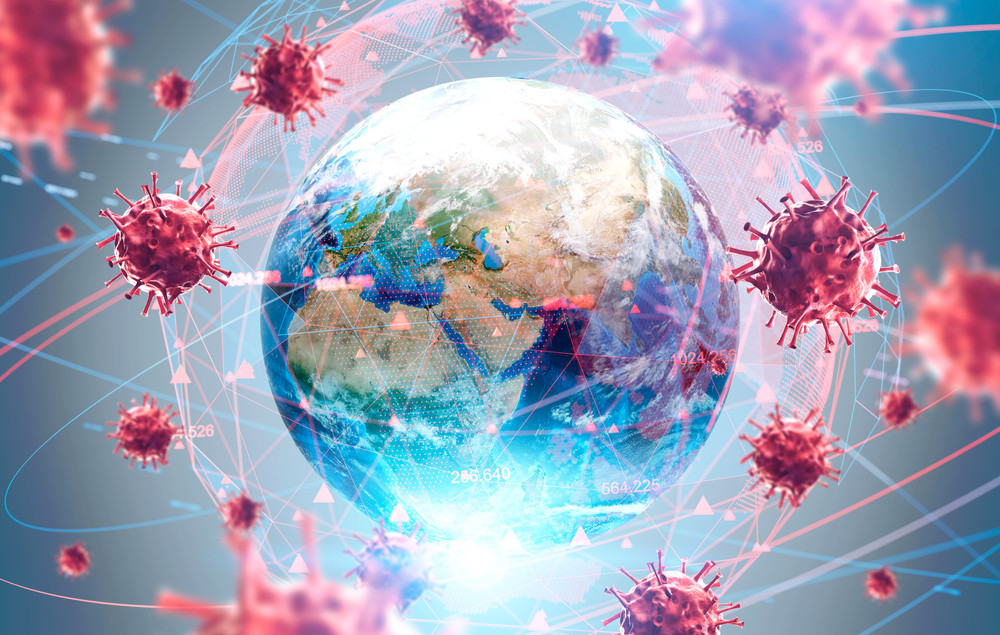
Studying historical pandemics helps researchers and governments understand how infectious diseases move through populations and how societies respond to health emergencies. Each pandemic has unique characteristics, so previous experiences cannot always provide an exact prediction of future events. However, historical knowledge can help improve surveillance, communication, healthcare planning, research, and emergency preparedness.
The COVID-19 Pandemic
The COVID-19 pandemic provided a modern example of how quickly an infectious disease can affect the world. After the virus emerged in late 2019, infections were identified in numerous countries. Transmission increased internationally, leading to significant pressure on healthcare systems and changes to everyday life.
Governments introduced different public health measures at various stages, including testing, isolation, vaccination programs, travel measures, public communication, and other strategies. Schools, workplaces, businesses, and social activities were affected in many countries. The pandemic also demonstrated the importance of reliable health information and cooperation between governments, scientists, healthcare workers, and communities.
The experience made the pandemic meaning familiar to people who previously may not have used the term regularly. It also highlighted how health emergencies can create economic, educational, social, and psychological challenges in addition to direct medical effects.
How Pandemics Affect Society
The effects of a pandemic can extend far beyond hospitals and healthcare facilities. Businesses may experience interruptions when employees become sick or when public health restrictions affect normal operations. Schools may need to change teaching methods, while families may face disruptions to work, travel, childcare, and daily routines.
Healthcare systems can become heavily pressured when large numbers of people require medical attention simultaneously. Supply chains may also experience difficulties, especially when transportation, manufacturing, or international trade are interrupted. Vulnerable populations can face greater risks because of limited access to healthcare, financial difficulties, age, or existing social disadvantages.
At the same time, pandemics can encourage innovation. Organizations may adopt new communication methods, researchers may accelerate medical studies, and communities may develop stronger systems for supporting vulnerable people.
How Can People Prepare for a Pandemic?
Pandemic preparedness involves actions taken before and during widespread disease transmission. Individuals can follow reliable health information, maintain good hygiene, and stay informed about recommended vaccinations or other preventive measures when appropriate. Families can also think about how they would manage work, education, medicines, and essential supplies during a prolonged health emergency.
Governments and healthcare organizations have broader responsibilities, including disease surveillance, emergency planning, medical supply management, public communication, and healthcare capacity. International cooperation is also important because infectious diseases can cross borders quickly.
Some useful preparedness practices include:
- Follow information from trustworthy public health authorities.
- Practice appropriate hygiene and infection-control measures.
- Follow medical and vaccination recommendations when applicable.
- Stay home and seek appropriate medical advice when seriously ill.
- Avoid spreading unverified health information.
Preparedness does not mean expecting a pandemic at all times. Instead, it helps individuals and communities respond more calmly and effectively when a serious infectious disease threat appears.
Why Understanding Pandemic Meaning Matters
Knowing the pandemic meaning helps people understand news reports, government announcements, health guidance, and educational materials. When people understand the difference between a local outbreak, an epidemic, and a pandemic, they can better understand the scale of a health emergency.
It also helps people avoid unnecessary confusion. The term pandemic describes the geographical extent of disease transmission, not simply how severe the illness is for every individual. Two diseases can have very different levels of seriousness while both being described as pandemics if they spread widely across countries and populations.
Clear understanding is particularly important during rapidly developing health emergencies. Reliable information can help people make responsible decisions while reducing the spread of rumors and misinformation.
Frequently Asked Questions
What is the simple pandemic meaning?
The simple pandemic meaning is a disease outbreak that spreads widely across multiple countries, regions, or continents and affects large populations.
Is every epidemic a pandemic?
No. An epidemic can remain limited to a particular region or population. A pandemic involves much broader geographical spread across countries or continents.
What is an example of a pandemic?
COVID-19 is a well-known modern example. Other historical examples include the 1918 influenza pandemic and the global HIV/AIDS pandemic.
How does a pandemic affect daily life?
A pandemic can affect healthcare, education, employment, travel, businesses, social activities, supply chains, and family routines.
Can pandemics be prevented?
It is not always possible to prevent a pandemic completely. However, disease surveillance, research, vaccination when available, public health measures, preparedness, and international cooperation can help reduce transmission and its effects.
Conclusion
The pandemic meaning refers to the widespread geographical transmission of an infectious disease across countries, regions, or continents. Pandemics can create major challenges for healthcare systems and influence education, employment, businesses, travel, and everyday life. Historical events show that pandemics are not new, while the COVID-19 experience demonstrated how quickly a modern infectious disease can affect interconnected communities around the world. Understanding the terminology, causes, effects, and preparedness measures can help people respond to health information more effectively. Although no society can predict every future pandemic, strong healthcare systems, scientific research, accurate communication, responsible individual behavior, and international cooperation can improve the ability to manage large-scale infectious disease emergencies.