Introduction
Understanding the pandemic meaning is important because the term is often used when discussing major disease outbreaks that affect people across countries and continents. A pandemic is generally an infectious disease outbreak that spreads over a wide geographic area and affects a substantial number of people. Unlike a small, localized outbreak, a pandemic can create challenges for healthcare systems, businesses, schools, governments, and communities. The word became especially familiar around the world during the COVID-19 crisis, but pandemics have occurred throughout human history. Learning what the term means can help people understand news reports, public health announcements, historical events, and discussions about disease prevention. The concept is not limited to one particular illness. Instead, it describes the broad geographic spread and significant impact of an infectious disease. Understanding the basics also helps explain why early detection, communication, preparedness, and cooperation are important when a disease begins spreading across borders.
What Is the Pandemic Meaning?
The pandemic meaning refers to an infectious disease outbreak that spreads across multiple countries or continents and affects a large population. The term comes from Greek roots associated with “all people,” reflecting the broad reach of such an event. A pandemic is different from an epidemic, although the two terms are closely related. An epidemic generally describes a disease spreading within a particular community, region, or country at levels higher than normally expected. When that spread becomes extensive across international or global regions, the situation may be described as a pandemic. The exact scale and circumstances can vary depending on the disease and its transmission patterns. A pandemic does not simply mean that a disease is dangerous; rather, its defining feature is widespread transmission across geographic boundaries. This distinction is useful because people sometimes use the word to describe any serious illness, even when the situation does not meet the broader meaning of the term.
Pandemic vs Epidemic vs Endemic
Knowing the difference between pandemic, epidemic, and endemic can make health-related information easier to understand. An epidemic usually involves an unusual increase in disease cases within a specific population or geographic area. A pandemic involves widespread transmission across countries or continents. An endemic disease, on the other hand, is one that is consistently present in a particular region or population, although the number of cases can change over time.
| Term | General Meaning | Geographic Reach |
|---|---|---|
| Outbreak | Sudden increase in cases | Usually local |
| Epidemic | Higher-than-expected disease spread | Regional or national |
| Pandemic | Widespread international transmission | Multiple countries or continents |
| Endemic | Disease regularly present in an area | Usually specific region |
These categories help provide context, but disease classification can depend on many factors. Public health authorities consider transmission, geographic spread, population impact, and other evidence when assessing a rapidly spreading disease.
How Does a Pandemic Begin?
A pandemic can begin when an infectious disease starts spreading among people in circumstances where large-scale transmission has not previously occurred. Several factors can influence how quickly an infectious disease moves through populations. These may include how easily it spreads, how frequently people interact, population movement, environmental conditions, and the level of existing immunity. Modern transportation can also allow infections to move between countries much faster than in earlier centuries. International travel connects communities that may be thousands of kilometers apart, meaning a disease that begins in one location can potentially reach other regions relatively quickly.
However, not every newly discovered disease becomes a pandemic. Many outbreaks remain limited because transmission decreases, public health measures are effective, or the infection does not spread efficiently between people. Monitoring unusual disease activity and responding quickly can therefore be important in reducing the possibility of widespread transmission.
Major Characteristics of a Pandemic
Several characteristics help explain why a pandemic can have such a significant effect on everyday life. The first is geographic reach. A pandemic extends beyond one local community and involves multiple regions. The second is sustained transmission, meaning the disease continues spreading among populations rather than remaining isolated to a few cases. Another characteristic is the pressure that widespread illness can place on public services and healthcare systems.
Important characteristics may include:
- Transmission across multiple countries or regions.
- A significant increase in infections.
- Pressure on healthcare and public services.
- Disruption to travel, education, and workplaces.
- Need for coordinated public communication and response.
The severity of a pandemic can vary considerably. A disease can spread widely while producing different levels of illness among different populations. Therefore, geographic spread and disease severity are related but should not be treated as identical concepts.
Historical Examples of Pandemics
History contains several examples that help explain the pandemic meaning in practical terms. The 1918 influenza pandemic, commonly known as the Spanish flu, caused widespread illness and deaths in many parts of the world. Another major example was the 2009 H1N1 influenza pandemic, which demonstrated how quickly a newly emerging influenza virus could spread internationally in a highly connected world.
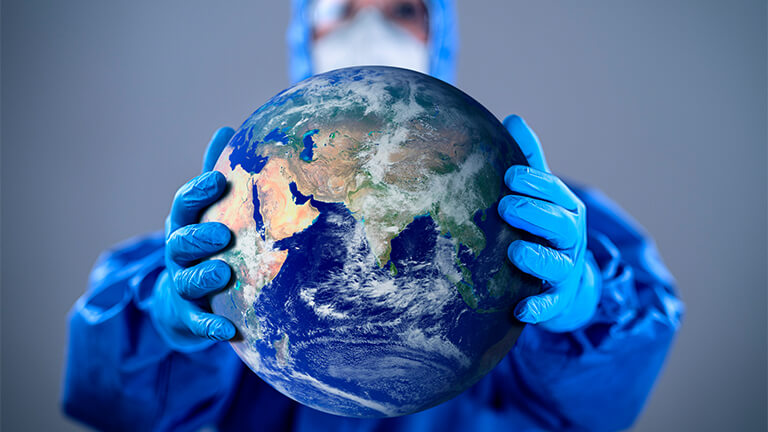 The COVID-19 pandemic became one of the most significant global events of the modern era. It affected healthcare, education, employment, travel, entertainment, supply chains, and everyday social activities. Governments and communities introduced different measures to reduce transmission and protect healthcare capacity. The experience also increased public awareness of terms such as infection rates, vaccines, testing, isolation, public health guidance, and disease surveillance.
Historical examples show that pandemics are not entirely new phenomena. What changes over time are the diseases involved, population conditions, technology, transportation systems, medical knowledge, and the tools available for responding to large-scale outbreaks.
Effects of a Pandemic on Society
The effects of a pandemic can extend far beyond healthcare. When widespread disease affects communities, businesses may experience interruptions, schools can face closures or changes in learning methods, and employees may have to adapt to new working arrangements. Travel and tourism can also decline when restrictions or public concerns reduce movement between regions.
Economic effects may include reduced consumer activity, supply-chain problems, changes in employment, and increased pressure on certain industries. At the same time, some sectors can experience rapid growth as demand changes. Technology and digital communication can become particularly important when people need to work, learn, shop, or communicate remotely.
Social life may also change. Events can be postponed, gatherings may be limited, and people may alter daily routines. These changes demonstrate why the pandemic meaning extends beyond a medical definition. A widespread infectious disease can influence nearly every part of society.
How Communities Respond to Pandemics
Responding to a pandemic generally requires cooperation between governments, healthcare organizations, researchers, businesses, schools, and individuals. Public health authorities may monitor disease activity, communicate risks, provide guidance, expand healthcare capacity, and coordinate testing or vaccination programs when appropriate.
Clear communication is particularly important. People need reliable information so they can understand changing circumstances and make informed decisions. Confusing or contradictory information can make an emergency harder to manage. Preparedness also plays a major role because communities with strong healthcare infrastructure, emergency planning, disease surveillance, and communication systems may be better positioned to respond.
Individual actions can also contribute to broader community efforts. Following credible public health guidance, staying informed, practicing appropriate hygiene, and seeking professional medical advice when necessary are examples of responsible behavior during disease outbreaks.
Importance of Pandemic Preparedness
Pandemic preparedness involves planning for the possibility of widespread infectious disease before an emergency occurs. Governments and organizations can develop emergency response plans, maintain essential supplies, train healthcare workers, improve surveillance systems, and establish communication strategies.
Businesses can also prepare by developing continuity plans that explain how essential operations can continue during major disruptions. Schools and educational institutions can consider alternative learning arrangements and communication systems. Communities can strengthen cooperation between local organizations and public services.
Preparedness does not guarantee that a pandemic will have limited effects, but it can improve the ability to respond quickly. Lessons learned from previous outbreaks can help institutions identify weaknesses and improve future planning. In this way, understanding the pandemic meaning is not only about defining a word; it is also about recognizing the importance of preparation and coordinated action.
Role of Science and Technology
Science and technology play an important role during large-scale disease outbreaks. Researchers can study how infections spread, identify disease characteristics, develop diagnostic methods, and investigate possible treatments or preventive measures. Digital systems can help collect and analyze information, while communication technologies allow authorities to distribute updates quickly.
Modern transportation and communication have created both opportunities and challenges. Diseases can travel more quickly because people move frequently between countries, but researchers can also share information internationally at unprecedented speed. Collaboration between laboratories, universities, healthcare institutions, and governments can accelerate understanding of emerging diseases.
Technology can also support remote work, online education, digital communication, and access to essential services during periods when normal activities are disrupted. These developments demonstrate how scientific knowledge and technological infrastructure can influence society’s ability to manage a pandemic.
Lessons Learned From Pandemics
One of the most important lessons from pandemics is that preparation matters. Healthcare capacity, reliable information, research, and effective communication can all influence how communities respond to a rapidly changing situation. Another lesson is that global cooperation is important because infectious diseases do not follow political borders.
Public trust is also valuable. People are more likely to follow appropriate guidance when information is clear, transparent, understandable, and supported by credible evidence. Pandemics also demonstrate the importance of flexible systems. Governments, businesses, schools, and families may all need to adapt their normal routines during a major emergency.
Understanding the pandemic meaning therefore provides more than a dictionary definition. It helps people recognize the scale of global disease events and understand why preparation, cooperation, science, and responsible communication are important.
Conclusion
The pandemic meaning describes the widespread transmission of an infectious disease across multiple countries or continents, affecting large populations and often creating significant social and economic disruption. While pandemics have existed throughout history, modern transportation and global connections can make international disease spread particularly complex. Historical events and recent experiences demonstrate the importance of healthcare preparedness, scientific research, accurate communication, and cooperation. Understanding the difference between an outbreak, epidemic, pandemic, and endemic disease also makes health information easier to interpret. Ultimately, learning about pandemics helps individuals and communities understand how widespread disease events develop, how they can affect everyday life, and why preparedness is essential for responding effectively to future global health challenges.